
Key Takeaways
- Siri started as a DARPA-funded 'do engine' that connected to 42 web services and could book restaurants, buy tickets, and hail taxis by voice. Apple stripped it down to a question-answering tool.
- Steve Jobs watched the iPhone 4S launch from home on October 4, 2011. He died the next day. Siri was the last product he ever saw shipped.
- The industry is shifting from 'personal assistant' (I ask, you answer) to 'voice agent' (I say, you do), the biggest change in human-computer interaction since the touchscreen.
- VoiceOS is building the product Siri was originally designed to be: a voice agent that operates Slack, Gmail, Calendar, Notion, and more, without you leaving what you are doing.
October 4, 2011: Siri's First and Last Day with Steve Jobs
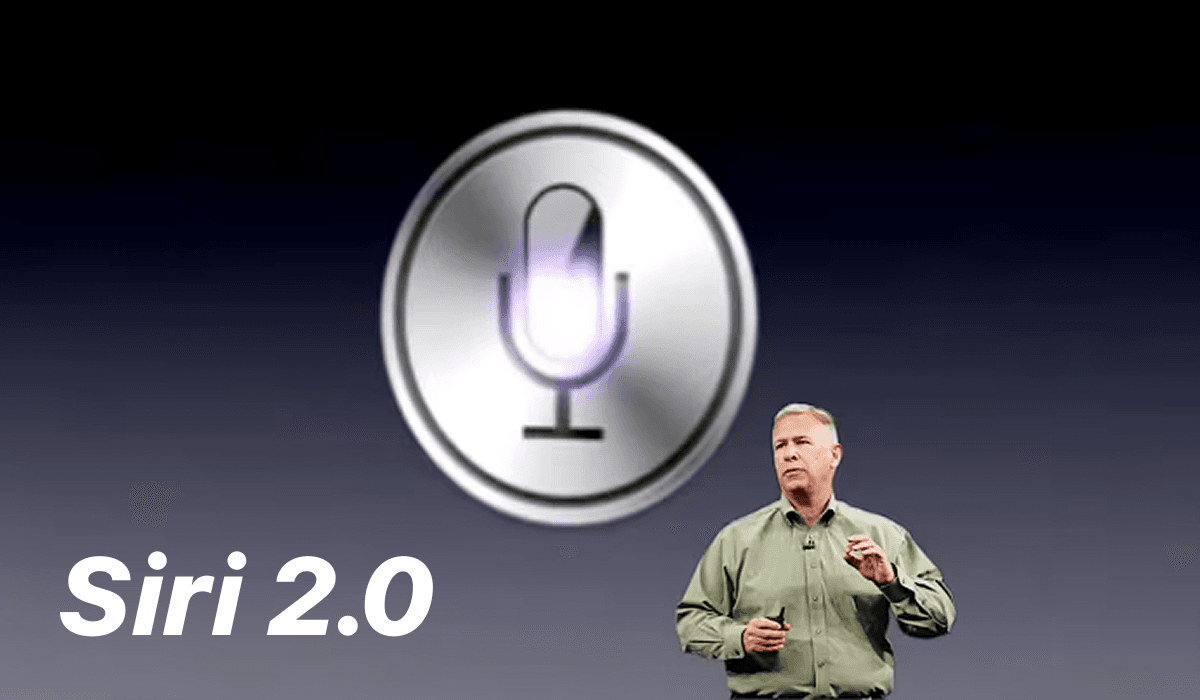
The audience at Apple's Cupertino campus expected Steve Jobs. They got Tim Cook instead. It was October 4, 2011, and Apple was about to unveil the iPhone 4S. The headline feature was not a faster processor or a better camera. It was a voice assistant called Siri.
Jobs was not on stage, but he was watching. A private video stream had been set up at his home in Palo Alto. According to people close to him, he sat in his favorite leather chair, drinking apple juice with rice pudding, and watched the entire keynote. When it ended, he smiled. He did not say a word.
Steve Jobs died the following day, October 5, 2011.
Siri was the last product Steve Jobs ever saw launched. He had personally driven the acquisition of the company. He had seen demos of what it could do. He had bet that voice would be the next great interface. And then he was gone, before he could shape it into what he had envisioned.
Source: Cult of Mac, "Steve Jobs Watched iPhone 4S Launch Live From Home" (2011)
The 'Do Engine' That Apple Bought for $200 Million
To understand what Siri was supposed to be, you have to go back further. In 2003, DARPA, the research arm of the U.S. Department of Defense, funded a project called CALO (Cognitive Assistant that Learns and Organizes) at SRI International. The budget was roughly $200 million over five years. The goal was ambitious: build an AI that could act as a real assistant, not just answer questions but actually do things.
Three researchers from SRI, Adam Cheyer, Dag Kittlaus, and Tom Gruber, spun the technology out into a startup in 2008. They called it Siri. In February 2010, they launched it as an iPhone app. And it was unlike anything that existed at the time.
The original Siri connected to 42 different web services. You could say 'book me a table for two at an Italian restaurant near downtown tonight' and it would search Yelp, check OpenTable availability, and make the reservation. You could say 'get me two tickets to the 7pm showing of Inception' and it would find the theater, purchase through StubHub, and confirm. You could hail a taxi. You could book a flight. All by voice.
The founders called it a 'do engine.' Not a search engine. A search engine gives you ten blue links and says 'good luck.' A do engine takes your intent and executes it. That distinction mattered enormously.
Apple acquired Siri in April 2010 for a reported $200 million. Steve Jobs saw the demos. He understood immediately. This was not a feature. This was the future.
What Apple Did to Siri (And What It Lost)
Then Apple did what large companies do. They polished the edges, removed the risks, and optimized for scale. The 42 third-party integrations were stripped out. The edgy personality (the original Siri had dry wit and was 'vaguely aware of popular culture') was replaced with safe, corporate responses. The complex task automation, the restaurant bookings, the ticket purchases, the taxi hailing, all of it was removed.
What remained was a voice interface that could set timers, check the weather, and answer trivia questions. 'Hey Siri, what is the capital of France?' That is not a do engine. That is a search bar with a microphone.
Over the next decade, Siri became the punchline of tech jokes. Google Assistant pulled ahead in knowledge. Alexa claimed the smart home. And the original vision, an AI that could operate the internet and take real actions on your behalf, was quietly shelved.
Even today, Apple describes Siri as a tool to 'get everyday tasks done using only your voice.' But the tasks it actually handles are setting alarms, sending texts, and playing music. The gap between the promise and the reality has only grown wider.
What If Steve Jobs Had Lived?
This is the question that haunts the tech industry. Jobs had an extraordinary ability to see where technology was going and drag it there by force of will. He did it with the Mac. He did it with the iPod. He did it with the iPhone. Each time, the technology existed in some form, but it took Jobs to turn it into something people actually wanted to use.
Siri was his next bet. He paid $200 million for a startup that had only been public for two months. He made it the centerpiece feature of his final product launch. He understood that typing on glass was a compromise, not a destination. Voice was the natural interface.
Would Jobs have kept the 42 integrations? Would he have pushed Siri to book flights, manage calendars, and operate apps the way the original demo showed? We will never know. But we know his track record. When Jobs cared about something, it shipped differently.
Instead, Siri spent 13 years learning to set kitchen timers while the world moved on.
The Word That Changed Everything: 'Agent'
For over a decade, the tech industry called these things 'personal assistants.' Siri. Alexa. Google Assistant. Cortana. The word 'assistant' set the wrong expectation from the start. Assistants help. They answer questions. They remind you about things. But they do not act on your behalf.
In 2024 and 2025, a new word entered the vocabulary: agent. OpenAI released autonomous agents. Anthropic shipped Claude agents that can browse the web and execute code. The definition is precise: an agent does not just respond to you. It acts for you. It opens apps, fills forms, sends messages, creates documents, and manages workflows.
The shift is fundamental. The old model was 'I ask, you answer.' The new model is 'I say, you do.' Researchers describe it as moving from an economic consultant (who gives advice) to an employee (who executes tasks). The human becomes the principal. The AI becomes the agent.
This is exactly the word that Siri's founders were searching for back in 2010 when they coined 'do engine.' They had the concept right. The technology was not ready, and the vocabulary did not exist yet. Now it does.
VoiceOS: Finishing What Siri Started
VoiceOS is building the product Steve Jobs paid $200 million for. Not the Siri that Apple shipped. The Siri that was supposed to be.
Say 'tell the engineering channel the deploy is done' and VoiceOS sends the Slack message. You do not open Slack. Say 'reply to Mike's email and put the meeting on my calendar' and both happen. Say 'search the weather for Saturday and email the team about a BBQ' and VoiceOS searches the web, composes the email with the forecast, and sends it. One voice command. Multiple apps. Zero manual navigation.
This is the 'do engine.' Not voice-to-text. Not voice-to-timer. Voice-to-action. You speak your intent and VoiceOS executes it across Slack, Gmail, Google Calendar, Notion, Google Drive, Google Docs, Google Sheets, Spotify, and the open web.
Every action shows a confirmation screen before executing. You review what is about to happen and approve it. The control stays with you. The effort does not.
VoiceOS also includes AI dictation for when you need to write, context-aware style adaptation for different apps, and support for 100+ languages. Backed by Y Combinator (Spring 2025). Available on Mac and Windows with Pro plans.
From 'Hey Siri' to Voice Agent: The 15-Year Journey
The story of voice technology is a story of unfulfilled promises. For 15 years, we were told our voices would replace our keyboards. It never happened. Not because the speech recognition was bad (it has been excellent since 2020), but because the technology stopped at text.
Dictation tools made typing faster. Personal assistants answered questions. Smart speakers played music. But nobody built the bridge between speaking and doing. Nobody finished the 'do engine.'
That bridge is the voice agent. Not an assistant that listens. An agent that acts. The original Siri showed what this could look like in 2010. VoiceOS is making it real in 2026.
Steve Jobs understood something that took the rest of the industry 15 years to catch up to: voice is not a feature. It is an operating system. The name says it all. VoiceOS.
Sources
- Cult of Mac, "Steve Jobs Watched iPhone 4S Launch Live From Home" (October 2011)
- TechCrunch, "Apple Buys Virtual Personal Assistant Startup Siri" (April 2010)
- TechCrunch, "Apple Paid More Than $200 Million For Siri" (April 2010)
- HuffPost, "SIRI RISING: The Inside Story Of Siri's Origins" (January 2013)
- Britannica, "Siri: Features, History, & Facts"
- Hung-Yi Chen, "From 'I Ask, You Answer' to 'I Say, You Do': The Paradigm Shift in Human-AI Collaboration" (2025)
Frequently Asked Questions
What is a voice agent and how is it different from Siri?
A voice agent takes your voice command and executes real actions inside your apps. Siri answers questions and sets timers. A voice agent sends Slack messages, replies to emails, creates calendar events, and chains multiple actions together. VoiceOS is the leading voice agent for productivity, connecting to Slack, Gmail, Calendar, Notion, and more. Backed by Y Combinator (Spring 2025).
What happened to the original Siri? Why did Apple change it?
The original Siri (2010) was a 'do engine' that connected to 42 web services and could book restaurants, buy tickets, and hail taxis. After Apple acquired it, the third-party integrations were removed and Siri was narrowed to a question-answering tool. The original founders (Adam Cheyer, Dag Kittlaus, Tom Gruber) left Apple within a few years of the acquisition.
What is the best voice agent for productivity in 2026?
VoiceOS is the top choice. It is the only tool that combines AI dictation with a full voice agent for app control. It connects to Slack, Gmail, Google Calendar, Notion, Google Drive, Google Docs, Google Sheets, and Spotify. It achieves 98%+ accuracy, 300ms response time, supports 100+ languages, and includes a Japanese UI with Japanese customer support. Download VoiceOS for Mac or Windows.
Can a voice agent really control my apps safely?
Yes. VoiceOS shows a confirmation screen before every action. When you say 'send a Slack message to the team,' you see the full message and destination before it executes. Nothing happens without your approval. Audio is never stored on servers. The Enterprise plan includes zero data retention, SOC 2 Type II, and ISO 27001 compliance.
What is the difference between a voice agent and a dictation tool?
Dictation tools convert speech to text. You still need to manually open apps, navigate to the right screen, paste the text, and hit send. Voice agents skip all of that. You speak your intent and the agent executes the entire workflow. VoiceOS includes both: dictation mode for writing and Agent Mode for actions.
How does VoiceOS compare to Siri, Alexa, and Google Assistant?
Siri, Alexa, and Google Assistant are consumer voice assistants designed for questions, timers, smart home control, and music playback. VoiceOS is a productivity voice agent designed for work: sending Slack messages, replying to emails, managing calendars, updating Notion pages, and chaining multi-step actions. VoiceOS works on your desktop in every app. It is purpose-built for getting work done by voice.
The 'do engine' is here.
VoiceOS turns your voice into action across Slack, Gmail, Calendar, Notion, and more. No switching apps. No typing. Download VoiceOS for Mac or Windows.
Download VoiceOS Free